
Skip to content

The Cognitive Optimization Program

Your Brain Is the Most Important Organ You've Never Measured.

A structured three-technology program at Next Health: Kernel and QEEG to measure your brain's current state, plus FDA-cleared Exomind TMS therapy for cognitive function. Built for patients serious about brain health optimization.

The Cognitive Optimization Program at Next Health

Kernel · QEEG · Exomind — Delivered at select Next Health locations under physician supervision

Three technologies. One coordinated program.

Kernel brain measurement + QEEG mapping for evaluation

Exomind TMS therapy for depression-mediated cognitive concerns

Delivered at select Next Health locations under physician supervision

Why Measure the Brain

"The Brain Has Been the Largest Blind Spot in Longevity Medicine."

For most of longevity medicine's history, we have measured everything except the organ that defines who you are. We measure blood. We measure heart rate. We measure sleep, body composition, hormone levels, inflammatory markers, and metabolic function. We assess every dimension of physical health with increasing precision.

The brain has been the exception. Until recently, the technology required to measure brain function was confined to academic research settings and was inaccessible to clinical practice. That has changed.

The Cognitive Optimization Program combines three of the most promising technologies for brain function measurement and brain-related treatment that have become available outside of research medicine. Kernel and QEEG let us measure the current state of your brain — your neural patterns, your cognitive performance across multiple domains, and your brain health baseline. Exomind, an FDA-cleared TMS therapy, treats the condition we encounter most often when patients describe cognitive symptoms: depression that is interfering with focus, motivation, and mental clarity.

This is not a treatment program for dementia or Alzheimer's disease. Those are different categories of care that require different clinical pathways — and our ReCODE Program addresses the upstream biomarker work that informs long-term cognitive risk. The Cognitive Optimization Program measures brain function directly and treats one specific, common, and often unrecognized contributor to cognitive symptoms: depression.

If you have been wondering whether your brain is performing the way you want it to, this is the program designed to answer that question — and to address what we find.

Dr. Darshan Shah, MD

Founder & Chief Medical Officer, Next Health

What's Included

Three Technologies. One Coordinated Program.

The Cognitive Optimization Program at Next Health is built around three of the most rigorous, technology-enabled tools in brain health. Two are for evaluation. One is for treatment when depression is affecting your cognitive function.

Phase 1 · Evaluation

Map Your Brain. See What's Actually Happening.

Technology 1

Kernel — Brain Measurement

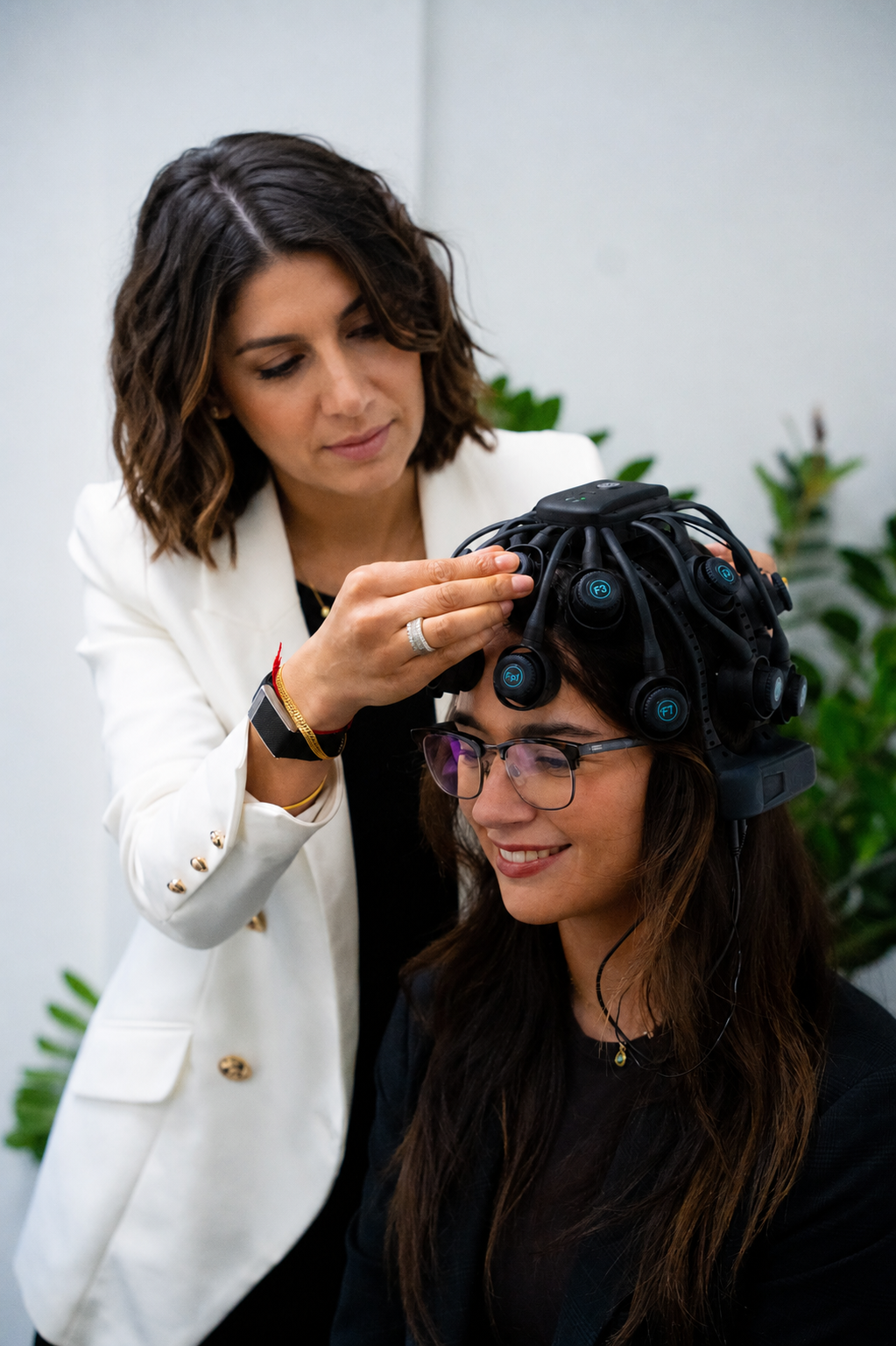
Kernel Flow — A New Generation of Brain Health Technology

Kernel's technology measures brain activity using their proprietary Flow headset — a non-invasive, lightweight device that produces detailed information about brain function. The scan takes approximately 30 minutes. You receive a user-friendly report with two primary metrics:

  • Brain Age tracker — an objective measure of your brain's performance built from thousands of scans, designed to let you see how your brain compares and track changes over time.
  • Cognition tracker — a detailed composition of your cognitive performance across key domains, designed for healthy brains rather than for disease assessment.

Longitudinal tracking is the core of Kernel's value: the same scan repeated over time reveals what interventions are actually changing your brain function — diet changes, exercise protocols, hormone optimization, sleep improvements, or any other lifestyle factor you are tracking through your broader Next Health care.

Kernel technology is for research use and is not intended to diagnose, treat, or manage any disease. Kernel reports provide information about brain function and are not medical diagnostic tests.

Technology 2

QEEG — Quantitative Brain Mapping

FDA-Cleared 10–20 Channel Dry EEG System

Quantitative EEG (QEEG) mapping uses an FDA-cleared dry EEG headset to record your brain's electrical activity across 10–20 channels in approximately 5 minutes. The system produces a report that breaks down your neural patterns across multiple cognitive domains:

  • Focussustained attention and stimulus control
  • Emotion Regulationbalancing emotional responses
  • Memoryencoding and retrieval
  • Executivemental clarity and decision-making
  • Resting Statemental reflection, adaptability, and sleep
  • Sensory Motorbody awareness and movement control
  • Visualpattern recognition and visual attention

QEEG and Kernel offer complementary information about your brain. QEEG measures electrical activity patterns in real time; Kernel measures hemodynamic patterns of brain activity. Together, they provide a more complete picture than either alone.

Phase 2 · Treatment (When Appropriate)

Address Depression That's Affecting Your Cognitive Function.

Technology 3 · When Appropriate

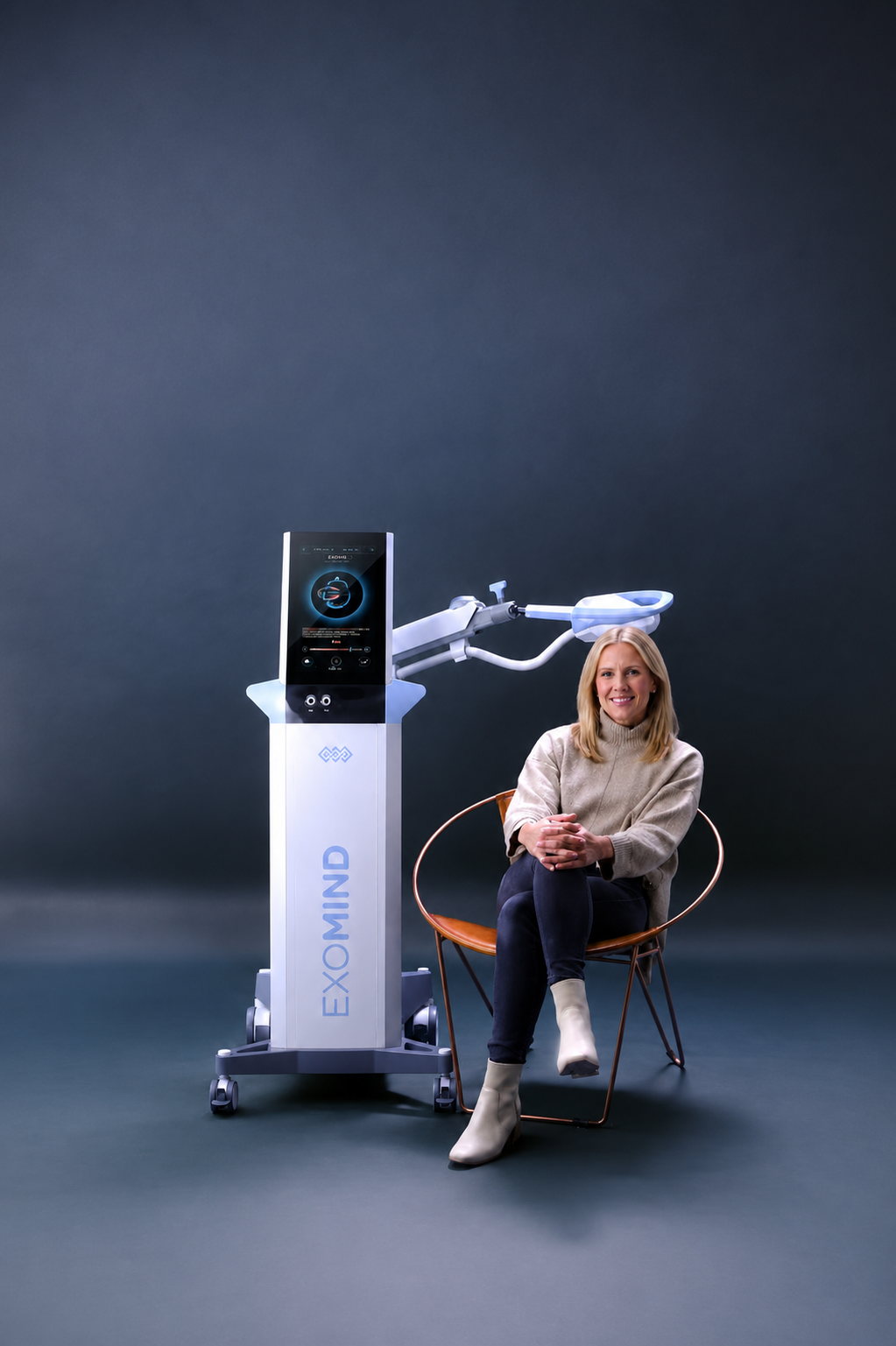
Exomind — FDA-Cleared TMS Therapy

For Adult Patients With Major Depressive Disorder Who Have Not Responded to Antidepressant Medication

Exomind is an FDA-cleared treatment for Major Depressive Disorder (MDD) in adult patients who have not achieved satisfactory improvement from prior antidepressant medication in their current depressive episode. The technology uses Transcranial Magnetic Stimulation (TMS) — a well-established, non-invasive therapy that has been studied for decades in the treatment of depression.

Why does an FDA-cleared depression treatment belong in a cognitive optimization program? Because depression is one of the most common — and most often unrecognized — contributors to cognitive symptoms. Patients describing brain fog, difficulty concentrating, poor memory, and motivation problems are often experiencing depression rather than a primary cognitive disorder. For these patients, treating the underlying depression addresses the cognitive symptoms at their source.

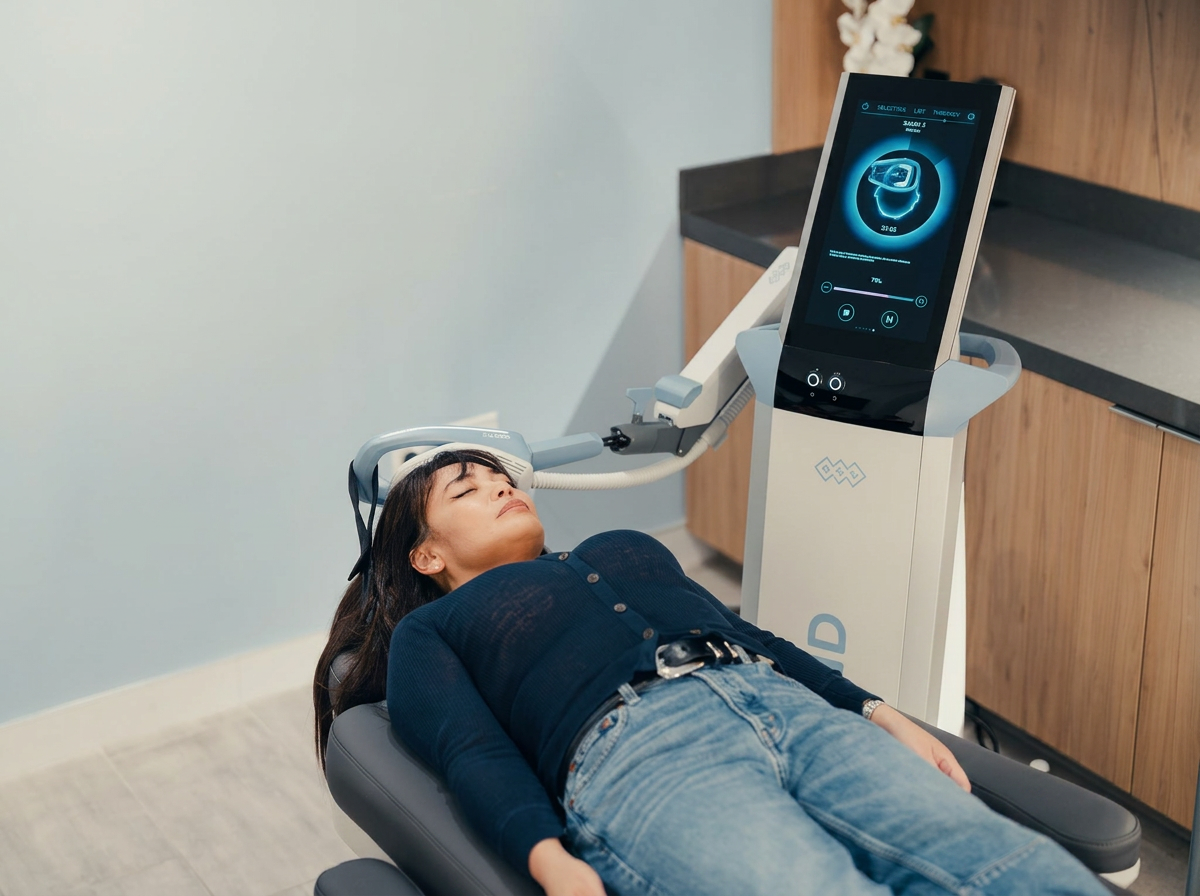
The Exomind treatment course at Next Health is administered by trained clinical staff under physician supervision. Sessions are comfortable, under 30 minutes, non-invasive, drug-free, and integrate easily into a normal day — patients walk in and walk out without significant disruption.

Exomind is FDA-cleared for the treatment of Major Depressive Disorder (MDD) in adult patients who have failed to achieve satisfactory improvement from prior antidepressant medication in the current episode. Exomind is not FDA-cleared for cognitive enhancement or for the treatment of Alzheimer's disease, dementia, or other cognitive conditions. Individual candidacy for Exomind is determined by your Next Health physician based on your medical evaluation.

The Methodology

Measure. Map. Optimize.

Three different technologies. One shared methodology — measure where your brain is now, map the patterns that explain why, and where appropriate, optimize through targeted intervention.

Phase 01

Measure

Your initial Kernel and QEEG scans establish a baseline measurement of your current cognitive function. Two different technologies measure different aspects of brain activity (hemodynamic and electrical), providing more complete information than either alone. This baseline becomes the reference point for everything that follows.

Phase 02

Map

Your physician reviews the measurement data with you and identifies patterns: areas of strong function, areas of weaker function, and any indicators that depression may be affecting your cognitive symptoms. The map informs which lifestyle, biomarker, or treatment interventions are most relevant for your situation.

Phase 03

Optimize

Where lifestyle interventions are indicated (sleep, exercise, nutrition, hormone optimization, biomarker work through ReCODE), those become your priority. Where depression is affecting cognitive function and other treatment paths have not produced relief, Exomind TMS therapy becomes available as a clinically indicated treatment. Follow-up measurement at three to six months tracks what has changed.

Manufacturer Attribution

Kernel develops the brain measurement technology used in Phase 1. Their published research on brain function tracking is available at kernel.com. The QEEG system used in Phase 1 is an FDA-cleared device manufactured by One Hype Wellness (One Brain X), with technology informed by NASA, NIH, and DARPA-funded neuroscience research. Exomind, used in Phase 3 when indicated, is FDA-cleared by BTL Industries and is supported by decades of TMS research in the treatment of Major Depressive Disorder.

Three technologies. One coordinated program. Your brain finally measured.

The Longitudinal Value

Your Brain Is Constantly Changing. Measure What Matters.

Unlike genetics, your brain function changes throughout your life — based on sleep, stress, nutrition, exercise, hormones, depression treatment, and the interventions you pursue through Next Health and elsewhere. Repeated measurement is what reveals what's actually working.

01

Brain Age Trajectory

Kernel's Brain Age metric provides a single composite number representing your brain's performance relative to a reference population. Repeated scans over time reveal whether your trajectory is improving, holding, or declining — and let you see the effect of lifestyle interventions, treatments, and other changes you're making.

02

Cognitive Domain Performance

QEEG measurement provides ongoing visibility into specific cognitive domains: focus, memory, executive function, emotion regulation. Repeated measurements identify which domains are responding to which interventions and which are not — letting you and your physician adjust your approach over time.

03

Treatment Response

For patients pursuing Exomind for depression, repeated cognitive measurement provides one piece of the picture of treatment response — alongside standard depression assessment instruments. The combination of cognitive measurement and depression assessment provides a more complete picture than either alone.

04

Integration With Broader Care

Your brain measurement data becomes part of your broader Next Health record. Your Apex+ care team, ReCODE engagement (if applicable), hormone optimization, and other Next Health services all contribute to your cognitive trajectory — and your measurement data lets your team see what's working.

Transparent Scope Disclosure

What This Program Is — And What It Isn't.

What This Program Is

  • A structured program combining cognitive measurement (Kernel and QEEG) with one specific FDA-cleared treatment (Exomind for depression) when clinically indicated.
  • A way to establish a baseline measurement of your current brain function and track changes over time — the brain analog of bloodwork or body composition tracking.
  • Appropriate for adults seeking objective measurement of cognitive function, those with concerns about brain performance, and those experiencing depression that may be contributing to cognitive symptoms.
  • Delivered at Next Health under physician supervision with the technology partners' manufacturer specifications followed.
  • Designed to integrate with your broader Next Health care — including Apex+ membership benefits where applicable and ReCODE engagement for patients pursuing both.

What This Program Is Not

  • Not a treatment, cure, or prevention for Alzheimer's disease, dementia, mild cognitive impairment (MCI), or any specific neurodegenerative condition.
  • Not a diagnostic program. Kernel is research-use technology; QEEG is FDA-cleared for measurement, not diagnosis. Neither replaces a neurological evaluation if you have concerning cognitive symptoms.
  • Not a substitute for medical evaluation of cognitive concerns. Patients with significant cognitive symptoms should also be evaluated by a neurologist or appropriate specialist through conventional channels.
  • Not appropriate for every participant. Specifically, Exomind is only indicated for adults with Major Depressive Disorder who have not responded to antidepressant medication, and your physician determines candidacy based on your specific clinical situation.
  • Not a replacement for ReCODE if biomarker-driven cognitive risk assessment is your primary interest — these programs address different dimensions of cognitive health.

Next Health members receive member pricing on the Cognitive Optimization Program evaluation and treatment components. Explore Memberships →

Is This Program Right For You?

Four Patient Profiles Who Pursue Brain Optimization.

This program is designed for adults committed to measuring and optimizing cognitive function. The following profiles consistently fit well with the program.

Profile 01

The High-Performance Professional

Adults whose cognitive performance is central to their work — executives, founders, knowledge workers, athletes, performers. They want objective measurement of their cognitive baseline and visibility into how lifestyle factors are affecting their brain performance over time.

Profile 02

The Patient With Brain Fog or Cognitive Symptoms

Adults experiencing brain fog, difficulty concentrating, mental fatigue, or poor memory who want to understand what is contributing. Often these symptoms have multiple drivers — sleep, hormones, nutrition, depression. The measurement phase identifies which factors are most relevant for your situation.

Profile 03

The Patient With Depression That Hasn't Responded to Medication

Adults with Major Depressive Disorder who have tried antidepressant medication without satisfactory improvement, and who are now exploring Exomind TMS therapy as a non-pharmaceutical alternative. The evaluation phase establishes a baseline measurement of cognitive function before and after treatment.

Profile 04

The Longevity Patient Adding Brain Measurement

Adults already pursuing comprehensive Next Health care who are adding brain measurement to their existing optimization protocol. ReCODE may also be relevant for these patients; the two programs together provide both upstream biomarker-driven risk assessment and direct brain function measurement.

What To Expect

From Screening to Long-Term Engagement.

  1. 1

    Screening Consultation

    Your program begins with a screening consultation with a Next Health physician. Approximately 30 minutes covering your full medical history, current medications, family history, cognitive concerns, and goals. The screening identifies which components of the program are most relevant for you — measurement only, measurement plus treatment, or whether a different evaluation pathway is more appropriate first.

  2. 2

    Baseline Cognitive Measurement

    You complete the initial Kernel scan (approximately 30 minutes) and QEEG mapping (approximately 5 minutes) at your Next Health location. Both can typically be completed on the same visit. You receive your baseline reports within the timeframe specified by each technology partner.

  3. 3

    Results Review With Your Physician

    Your Next Health physician reviews the Kernel and QEEG reports with you in detail. The review identifies patterns, contextualizes the data within your medical history, and discusses interventions appropriate for your situation. For some patients, lifestyle interventions are the priority. For others, depression treatment via Exomind is clinically indicated.

  4. 4

    Treatment Phase (When Indicated)

    If you and your physician determine that Exomind treatment is appropriate for your specific clinical situation, the treatment course is scheduled at a Next Health location offering Exomind. Sessions are under 30 minutes, comfortable, non-invasive, and integrate easily into a normal day. The full treatment course timing is discussed during your consultation.

  5. 5

    Lifestyle and Care Integration

    Independent of whether you pursue Exomind, the measurement data informs your broader Next Health care. Hormone optimization, sleep work, nutrition adjustments, biomarker work through ReCODE (if applicable), and other interventions become more targeted because you and your team have actual brain measurement data to inform priorities.

  6. 6

    Follow-Up Measurement

    At three to six months, repeat Kernel and QEEG measurements track changes — whether from Exomind treatment, lifestyle interventions, or both. The follow-up measurement is the closing of the program's first cycle and the beginning of your longitudinal tracking. Many patients continue measurement at regular intervals for years.

Pricing and Enrollment

Two Cost Components. One Integrated Program.

The Cognitive Optimization Program combines two cost categories: the evaluation phase and, when clinically indicated, the treatment phase. Each is described below.

Evaluation Phase

Kernel + QEEG + Physician Review

Initial Kernel brain scan, QEEG brain mapping, physician review of both reports, and integration with your broader Next Health care. Pricing for the evaluation phase is set by Next Health and discussed transparently during your screening consultation.

Treatment Phase · When Indicated

Exomind TMS Course

Exomind TMS therapy course pricing, set by Next Health, discussed during your physician review if Exomind is clinically indicated for your situation. Pricing varies based on the recommended treatment course length, which is determined by your physician based on FDA-approved protocol parameters.

Next Health members (Medicine 4.0, Optimize 4.0, Premier 4.0, Apex+) receive member pricing on the evaluation phase. Members also receive priority scheduling for both evaluation and treatment phases.

Or speak with our team directly: (310) 295-2075

Frequently Asked Questions

What Patients Ask Most.

Will this program tell me if I have Alzheimer's disease or dementia?+

No. This program is not designed to diagnose Alzheimer's disease, dementia, mild cognitive impairment, or any specific neurodegenerative condition. Kernel technology is for research use and not intended for medical diagnosis. QEEG is FDA-cleared for measurement, not diagnostic interpretation. Patients with significant cognitive symptoms or concerns about neurodegenerative disease should also be evaluated by a neurologist or appropriate specialist through conventional medical channels.

How is this different from the ReCODE Program?+

ReCODE is a biomarker-driven cognitive optimization program developed by Dr. Dale Bredesen, focused on identifying and addressing modifiable risk factors that influence cognitive function — nutrition, hormones, inflammation, toxin exposure, and similar upstream factors. The Cognitive Optimization Program measures the brain itself (its function and electrical patterns) and treats one specific condition (depression) that frequently contributes to cognitive symptoms. The two programs are complementary, not competing. A patient could legitimately pursue both.

Does everyone in this program receive Exomind treatment?+

No. Exomind is FDA-cleared specifically for the treatment of Major Depressive Disorder in adults who have not responded to prior antidepressant medication. Many patients in the Cognitive Optimization Program never receive Exomind because depression is not a contributing factor to their situation. The evaluation phase determines whether Exomind is clinically indicated for you specifically.

What is Kernel technology and is it safe?+

Kernel uses a non-invasive headset to measure brain activity. The technology has not been associated with safety concerns in its current research use, but Kernel itself classifies its systems as research-use and not intended to diagnose, treat, or manage any disease. The technology does not involve radiation, magnetic fields, or invasive procedures. Specific risks and contraindications are reviewed during your screening consultation.

Will my insurance cover any of this?+

Insurance coverage of the cognitive measurement components (Kernel, QEEG) is generally limited because these technologies are not typically categorized as medical diagnostics. Insurance coverage of Exomind for FDA-approved Major Depressive Disorder treatment varies by carrier and policy. Your screening consultation includes a discussion of insurance status. HSA/FSA eligibility also varies — your Next Health team can provide documentation for any reimbursement claims you submit.

How often should I repeat the measurements?+

Most patients repeat Kernel and QEEG measurements at three to six months to capture changes from interventions. After the first follow-up, ongoing measurement frequency depends on your individual goals — high-performance patients tracking cognitive optimization may measure every six months, patients managing depression after Exomind may measure at intervals aligned with their treatment course.

Are the measurement procedures painful or uncomfortable?+

Kernel measurement involves wearing a comfortable headset for approximately 30 minutes — non-invasive, no needles, no discomfort. QEEG involves wearing an EEG headset with sensors that contact your scalp for approximately 5 minutes — also non-invasive and comfortable, with no gel or messy preparation. Neither measurement involves needles, blood draws, or invasive procedures.

Is Exomind covered if I do receive treatment?+

Exomind is administered as TMS therapy under physician supervision. Insurance coverage of TMS therapy for FDA-approved Major Depressive Disorder varies significantly by carrier — some plans cover TMS treatment after failure of one or more medications, others have different coverage criteria. Specific insurance coverage for your situation is discussed during your evaluation if Exomind treatment is recommended for you. Self-pay options are also available.

Where do I receive this program?+

Brain measurement and Exomind treatment are offered at select Next Health locations. Specific location availability is discussed during your screening consultation. Some elements may require travel to a specific location for the full program experience.

Who developed these technologies?+

Kernel is developed by Kernel Co. (kernel.com). QEEG technology in this program is provided by One Hype Wellness (One Brain X). Exomind is developed by BTL Industries (bodybybtl.com/solutions/exomind). Next Health licenses or partners with these manufacturers to deliver their technologies under our clinical infrastructure. Full attribution for technology and any published research belongs to the respective manufacturers.

Ready to Begin?

Stop Guessing About Your Brain. Start Measuring.

Schedule a screening consultation with a Next Health physician. We'll discuss your goals, your situation, and which components of the Cognitive Optimization Program are most relevant for you.

Or speak with our team: (310) 295-2075

The Cognitive Optimization Program at Next Health combines three technologies: Kernel (a research-use brain measurement technology not intended to diagnose, treat, or manage any disease), QEEG (an FDA-cleared device for recording quantitative EEG measurements), and Exomind (FDA-cleared by BTL Industries for the treatment of Major Depressive Disorder in adult patients who have failed to achieve satisfactory improvement from prior antidepressant medication in the current episode). None of these technologies is FDA-approved for the treatment, cure, or prevention of Alzheimer's disease, dementia, mild cognitive impairment, or any specific cognitive disorder. Individual candidacy for Exomind treatment is determined by your Next Health physician based on your medical evaluation. Outcome claims and research citations belong to each respective manufacturer. Patients with concerning cognitive symptoms should be evaluated by appropriate medical specialists in addition to or before pursuing this program. Please review our complete Medical Disclaimer for additional information.